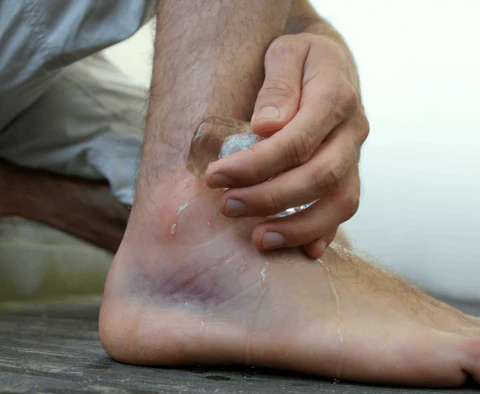
An ankle fracture happens when one or more bones break, and you might feel sharp pain and swelling within minutes. Since fractures range from small cracks to complete breaks, your recovery plan depends on the severity of the injury. Here are some basic steps to care for your ankle at home:
Wear a Boot as Instructed
Your provider may give you a walking boot to hold the ankle steady. The boot limits movement, and this helps the bone heal in the right position. Wear it exactly as directed, even when the ankle starts feeling better. Removing it too soon slows healing.
Since the boot supports your alignment, keep it on during walking and standing. You might loosen it while resting, but follow your provider’s notes. Check your skin daily for redness or pressure sores. Report anything unusual to your care team.
Manage Pain and Swelling
Swelling is typical after an ankle fracture, and it may be intense during the first few days. Rest the ankle and raise it above heart level to reduce fluid buildup. When you sit or lie down, prop the leg on pillows for support.
Ice helps too, though you need to use it correctly. Apply an ice pack for short sessions, and always place a cloth between the ice and your skin. A few simple habits make swelling easier to control:
- Elevate the ankle whenever you rest
- Ice for 15 to 20 minutes at a time
- Take pain medication as directed
- Avoid standing for long stretches
Since pain patterns shift during healing, track how you feel each day. Call your provider if pain grows worse instead of better. Sudden changes may signal a problem that needs attention.
Keep Weight Off Leg
Putting weight on a healing ankle too early risks further damage. Your provider will tell you when weight-bearing is safe, and that timeline varies by injury. Until then, keep your foot off the ground as much as possible.
You have a few tools that help you stay off the leg:
- Crutches for short trips around the house
- A knee scooter for longer distances
- A wheelchair if both options feel unsteady
Since balance shifts when you avoid weight, move slowly, and clear walkways first. Loose rugs and clutter raise your fall risk. A tidy path keeps each trip safer.
Use Crutches When Appropriate
Crutches let you move while protecting the healing bone. Adjust them so the tops sit about two inches below your armpits, and rest your weight on your hands. Poor fit leads to sore shoulders and wrists.
Since stairs add difficulty, take them one step at a time. Lead with your good leg going up, and lead with the crutches going down. Ask someone to spot you until the pattern feels natural.
Practice on flat ground first. Since every fracture heals at its own pace, follow your care instructions closely and watch for warning signs. Small daily steps keep your recovery on track.
Address an Ankle Fracture
Caring for an ankle fracture takes patience and a few steady habits. Wear your boot, manage swelling, and stay off the leg until your provider clears you. If you suspect a fracture or your symptoms change, get checked right away. A podiatry clinic offers visits, on-site imaging, and clear next steps for your injury.
- How To Manage a Rotator Cuff Tear
- Treatment Options for a Rotator Cuff Tear
- Erectile Dysfunction Specialists and How They Help Improve Quality of Life
- The Benefits of a Podiatrist in Managing Chronic Foot Pain
- What To Expect During a Visit to the Gynecologist
